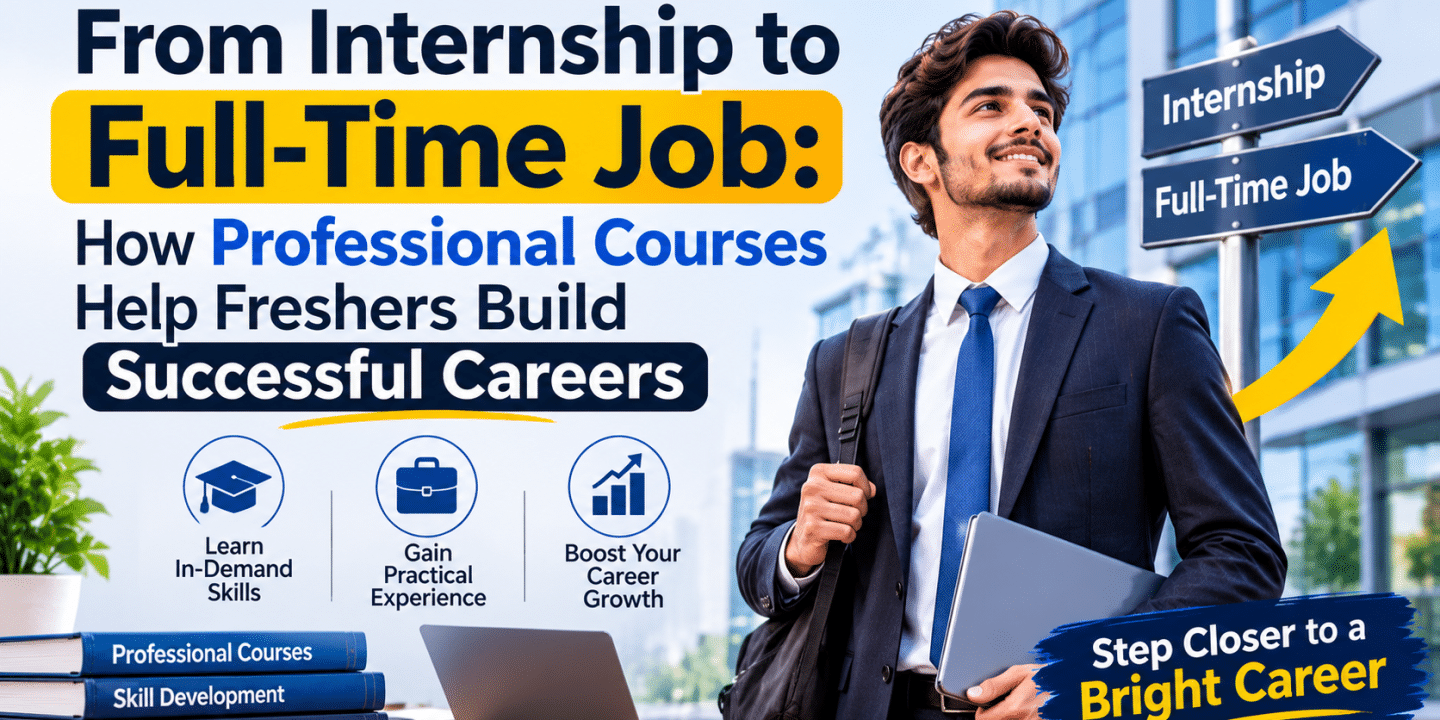
Starting a career after graduation can be challenging, especially for freshers who have theoretical knowledge but limited industry experience. Many graduates complete their degrees with good academic results but struggle when applying for their first job. Employers increasingly look for candidates who understand industry requirements, possess practical skills and can contribute to real business projects from the beginning.
This is where professional training courses, internships and industry-orientated learning become important. Instead of depending only on academic qualifications, students can develop specialised skills, gain practical experience and prepare themselves for professional opportunities.
Today, choosing the best professional courses with placement assistance can help freshers understand industry expectations and become more confident during job applications and interviews. Fields such as Data Science and Artificial Intelligence, Cybersecurity and Ethical Hacking, Investment Banking, Generative AI, Digital Marketing and Cloud Computing offer different career pathways for individuals interested in building specialised skills.
But how does an internship help someone secure a full-time job? Which job-orientated courses should freshers consider? And what should students look for when choosing a professional training institute?
Let’s explore how the right combination of professional education, practical training and career guidance can help graduates move from internships to full-time employment.
Why Do Freshers Struggle to Get Their First Job?
One of the biggest challenges fresh graduates face is the gap between academic learning and practical workplace requirements.
While colleges provide foundational knowledge, many entry-level positions require additional technical skills, industry exposure and familiarity with professional tools.
Some common challenges faced by freshers include:
- Lack of practical experience: Many graduates understand theoretical concepts but have limited experience working on real-world projects.
- Skill gaps: Employers may expect knowledge of specialised tools, software and technologies that are not covered extensively in traditional education.
- Limited interview preparation: Freshers may find it difficult to explain their technical knowledge, projects and problem-solving abilities during interviews.
- Strong competition: Candidates often compete with applicants who already have internships, certifications and practical experience.
- Unclear career direction: Graduates may be unsure about which professional field offers opportunities that match their interests and abilities.
These challenges highlight why job-oriented courses for freshers are becoming an important part of career preparation.
How Professional Courses Help Freshers Become Job-Ready
Professional courses focus on developing specific skills required in different industries. Unlike general academic learning, these courses often combine technical knowledge, practical assignments, projects and career preparation.
Here are some ways professional training can help graduates improve their employability.
1. Industry-Relevant Technical Skills
Employers look for candidates who understand the tools and technologies used in their respective industries.
For example, a Data Science professional may need Python, SQL, machine learning and Power BI skills, while someone pursuing cybersecurity may need knowledge of networking, Linux, vulnerability assessment and penetration testing.
Enrolling in the best professional certification courses can help freshers develop specialised knowledge and understand how these technologies are applied in professional environments.
2. Practical Projects and Real-World Learning
Practical experience helps students understand how theoretical concepts are used to solve business problems.
Working on assignments, case studies and capstone projects allows learners to develop technical confidence and demonstrate their abilities.
For example:
- Data Science students can work on predictive analytics and machine learning projects.
- Cybersecurity students can perform authorised vulnerability assessments in controlled environments.
- Digital Marketing students can develop SEO strategies and analyse campaign performance.
- Investment Banking students can practise financial modelling and valuation exercises.
- Generative AI students can develop AI-powered applications and workflow automation projects.
These experiences can strengthen a candidate’s resume and provide useful discussion points during interviews.
3. Internship Opportunities and Workplace Exposure
An internship is an important step between professional training and full-time employment.
It allows students to understand workplace expectations, collaborate with teams, complete assigned responsibilities and apply their technical knowledge.
During an internship, freshers can develop:
- Professional communication skills.
- Teamwork and collaboration.
- Time management.
- Technical problem-solving.
- Workplace adaptability.
- Industry-specific knowledge.
A relevant internship can also help candidates build professional connections and understand which career direction suits them.
4. Resume Building and Interview Preparation
Even candidates with good technical skills may struggle if they cannot communicate their experience effectively.
Professional training institutes that offer career support can help students prepare industry-focused resumes, organise their project portfolios and improve their interview performance.
Mock interviews, technical discussions and communication exercises can help freshers approach recruitment processes with greater confidence.
5. Better Understanding of Career Opportunities
Professional courses also help students understand the different roles available within an industry.
For example, someone learning data science and AI may explore opportunities in data analytics, machine learning and AI development. Similarly, cybersecurity training can introduce learners to security analysis, penetration testing and network security roles.
Understanding these career paths makes it easier to identify relevant job opportunities and prepare for specific positions.
Best Job-Orientated Courses for Freshers in 2027
Choosing the right professional course is an important decision for graduates who want to improve their career prospects. The ideal course should match their interests, offer relevant technical skills and provide opportunities for practical learning.
Here are some of the best professional courses freshers can consider.
1. Data Science and Artificial Intelligence
Data Science and Artificial Intelligence Course have become important areas across industries, including finance, healthcare, retail, technology and e-commerce.
Businesses use data to understand customer behaviour, improve operations and make informed decisions. AI technologies are also helping organisations automate tasks and develop intelligent applications.
A Data Science and AI course can help students develop skills in:
- Python programming.
- SQL and database management.
- Statistics and data analysis.
- Machine learning.
- Deep learning.
- Generative AI.
- Agentic AI.
- Data visualisation using Power BI and Tableau.
Career opportunities: Data Analyst, Junior Data Scientist, Machine Learning Engineer, AI Engineer and Business Intelligence Analyst.
For freshers interested in analytics, mathematics, programming and emerging technologies, this is a promising professional learning pathway.
2. Cybersecurity and Ethical Hacking
As organisations become increasingly dependent on digital infrastructure, protecting sensitive information and computer networks has become essential.
Cybersecurity and Ethical Hacking courses help learners understand how cyber threats operate and how organisations can identify and manage security vulnerabilities.
Important learning areas include:
- Network security.
- Linux and operating systems.
- Ethical hacking fundamentals.
- Penetration testing.
- Vulnerability assessment.
- Web application security.
- Digital forensics.
- Security monitoring.
Career opportunities: Cybersecurity Analyst, Ethical Hacker, Penetration Tester, Security Engineer, Network Security Specialist and Vulnerability Assessor.
This course can be suitable for freshers interested in technology, investigation, networking and digital security.
3. Generative AI and Agentic AI
Artificial Intelligence is moving beyond basic automation towards systems that can generate content, analyse information and perform multi-step tasks.
Generative AI and Agentic AI skills are becoming relevant across technology, business operations, marketing and customer service.
A professional course in this field can introduce learners to:
- Large Language Models (LLMs).
- Prompt Engineering.
- Retrieval-Augmented Generation (RAG).
- AI Agents.
- Agentic workflows.
- AI-powered automation.
- Python and AI application development.
Career opportunities: Generative AI Developer, AI Application Developer, Junior AI Researcher, AI Automation Specialist and AI Solutions Associate.
Freshers who enjoy programming, innovation and emerging technologies can explore this field to develop specialised technical capabilities.
4. Investment Banking and Financial Analytics
The financial services industry requires professionals who understand financial statements, business valuation, financial modelling and investment analysis.
An Investment Banking and Financial Analytics course helps learners develop the financial and analytical skills needed to understand business transactions and financial decision-making.
Important learning areas include:
- Financial statement analysis.
- Financial modelling.
- Equity research.
- Business valuation.
- Mergers and acquisitions.
- Corporate finance.
- Advanced Excel.
- Power BI and Tableau.
Career opportunities: Investment Banking Analyst, Financial Analyst, Equity Research Associate, Financial Modelling Analyst and Valuation Analyst.
This course can be a suitable option for commerce graduates, finance students and individuals interested in banking and financial services.
5. Digital Marketing and AI
Businesses increasingly depend on digital platforms to attract customers, build brand awareness and generate leads.
Digital marketing combines creativity, analytical thinking and technology to help organisations reach their target audiences.
A Digital Marketing and AI course can cover:
- Search Engine Optimisation (SEO).
- Search Engine Marketing (SEM).
- Social Media Marketing.
- Content Marketing.
- Email Marketing.
- Web Analytics.
- Performance Marketing.
- AI-powered marketing tools.
Career opportunities: SEO Executive, Digital Marketing Executive, Social Media Specialist, Performance Marketing Executive and Content Marketing Specialist.
Freshers interested in branding, communication, creativity and online business growth can consider this career path.
6. Cloud Computing and DevOps
Modern businesses use cloud infrastructure to manage applications, databases and digital services. Cloud Computing and DevOps professionals help organisations develop, deploy and maintain reliable technology environments.
Important learning areas include:
- Cloud infrastructure.
- AWS and Microsoft Azure.
- Linux administration.
- Docker.
- Kubernetes.
- CI/CD pipelines.
- Infrastructure automation.
- Cloud security fundamentals.
Career opportunities: Cloud Support Associate, Junior DevOps Engineer, Cloud Engineer and Infrastructure Support Engineer.
This field is worth exploring for graduates interested in IT infrastructure, software deployment and cloud technologies.
From Internship to Full-Time Employment: What Makes the Difference?
An internship can provide valuable professional experience, but securing a full-time job requires more than simply completing an internship.
Freshers need to demonstrate that they can apply their knowledge, understand responsibilities and contribute to organisational goals.
Here are some factors that can help candidates move towards full-time employment.
Build a Strong Technical Portfolio
A portfolio allows employers to understand what a candidate can actually do.
Instead of listing only completed courses, include projects, assignments, case studies and practical work.
For example, a cybersecurity fresher can showcase authorised vulnerability assessment reports, while a Data Science learner can present machine learning projects and analytical dashboards.
Develop Communication Skills
Technical knowledge is important, but professionals must also explain their ideas clearly.
Communication, presentation skills, teamwork and professional email writing can help freshers perform better in interviews and workplace environments.
Learn to Work with Industry Tools
Understanding industry-relevant tools can help candidates adapt to professional responsibilities.
Students should practise using the technologies associated with their chosen career path rather than relying only on theoretical explanations.
Take Feedback Seriously
Internships provide opportunities to learn from experienced professionals. Candidates should actively seek feedback, improve their performance and demonstrate a willingness to learn.
Prepare for Technical and HR Interviews
Freshers should practise technical questions, project explanations, problem-solving exercises and common HR interview questions.
Preparation helps candidates communicate their strengths and demonstrate their suitability for entry-level roles.
Why Choose Boston Institute of Analytics for Professional Courses and Placement Assistance?
Choosing the right training institute is an important step for freshers who want to develop industry-relevant skills and prepare for professional opportunities.
Boston Institute of Analytics (BIA) offers career-focused professional courses designed to combine technical learning, practical exposure and career development support.
Students can explore specialised learning pathways across technology, artificial intelligence, cybersecurity, finance and digital marketing.
Some of the key courses offered by BIA include:
- Data Science and Artificial Intelligence.
- Cybersecurity and Ethical Hacking.
- Generative AI and Agentic AI.
- Investment Banking and Financial Analytics.
- Financial Modeling and Business Analytics.
- Equity Research and Valuation Analytics.
- Digital Marketing and AI.
- Cloud Computing and DevOps.
- Full Stack Web Development.
Practical Learning and Industry-Relevant Projects
BIA focuses on helping learners understand how professional concepts are applied in real-world environments. Depending on the selected course, students gain exposure to relevant tools, technologies, practical assignments, case studies and capstone projects.
This approach helps learners build technical confidence and develop a portfolio that can support their job applications.
Internship and On-the-Job Training Opportunities
Internships can help freshers gain workplace exposure and understand professional responsibilities.
BIA offers a two-month internship with eligible diploma courses and six-month job training with eligible Master Diploma courses in selected fields. These opportunities help bridge the gap between classroom learning and professional experience.
Lifetime Placement Assistance
BIA provides 100% lifetime placement assistance to support learners in their career journeys.
The career support process includes:
- Resume building and profile development.
- Interview preparation.
- Career guidance and counselling.
- Access to hiring partner opportunities.
- Technical and HR interview preparation.
- Professional development support.
With a network of 350+ corporate partners, BIA aims to connect learners with relevant career opportunities.
Placement assistance and training support help improve employability, although securing a job depends on individual performance, skills, employer requirements and market conditions.
Dual Certification and Career Development
BIA also offers dual certification options in selected courses, helping learners demonstrate their training and subject knowledge.
For freshers, combining recognised credentials with practical projects, technical expertise and interview preparation can help build a stronger professional profile.
Explore the Boston Institute of Analytics to discover professional courses, internship opportunities and career-focused training options.
How to Choose the Best Professional Course After Graduation
Not every course is suitable for every student. Before enrolling in a professional training course, freshers should consider their interests, educational background and long-term career goals.
Here are some important factors to evaluate:
1. Identify Your Career Interests: Decide whether you are more interested in technology, finance, analytics, cybersecurity, marketing or software development.
2. Check the Course Curriculum: Look for courses that cover relevant tools, practical assignments and industry-oriented skills.
3. Evaluate Internship Opportunities: Understand whether the course includes internship exposure, practical projects or on-the-job training.
4. Review Career Support: Check whether the institute provides resume assistance, interview preparation, career counselling and placement assistance.
5. Understand the Learning Structure: Compare course duration, certification options, classroom or online learning modes and practical training opportunities.
6. Explore Industry Relevance: Choose a course that develops skills applicable to the roles you want to pursue.
The right course should not simply add another certificate to your resume. It should help you develop practical abilities that you can demonstrate to potential employers.
Conclusion
Moving from an internship to a full-time job is an important milestone in every fresher’s career. However, achieving this transition requires the right combination of technical knowledge, practical experience, communication skills and professional preparation.
Job-oriented courses can help graduates understand industry requirements, develop specialised expertise and become more confident when applying for professional opportunities.
Whether you are interested in Data Science and AI, Cybersecurity and Ethical Hacking, Generative AI, Investment Banking, Digital Marketing or Cloud Computing, investing in relevant professional training can help you work towards your career goals.
With practical learning, internship opportunities, industry exposure and career guidance, Boston Institute of Analytics aims to help students and fresh graduates prepare for the evolving job market.
Your first job begins with the skills you build today. Choose the right professional course, gain practical experience and take the next step towards a successful career.
Frequently Asked Questions (FAQs)
1. Which are the best professional courses with placement assistance for freshers?
Some of the best professional courses for freshers include Data Science and AI, Cybersecurity and Ethical Hacking, Generative AI and Agentic AI, Investment Banking and Financial Analytics, Digital Marketing, Cloud Computing and Full Stack Web Development. Choose a course based on your career interests, practical learning requirements and available placement support.
2. Can freshers get a full-time job after completing an internship?
Yes. An internship can help freshers gain practical experience, understand workplace responsibilities and develop professional skills. However, full-time employment depends on job availability, individual performance, employer requirements and the candidate’s overall skills.
3. Which courses offer internship opportunities after graduation?
Professional courses in Data Science and AI, Cybersecurity and Ethical Hacking, Investment Banking, Generative AI and other technology fields may include internship opportunities depending on the institute and course structure. Students should verify the internship duration and eligibility before enrolling.
4. What are the best job-oriented courses after graduation in 2027?
Popular career-focused options include Data Science and Artificial Intelligence, Cybersecurity and Ethical Hacking, Generative AI and Agentic AI, Digital Marketing, Investment Banking and Financial Analytics, and Cloud Computing. These courses help learners develop specialised skills relevant to different industries.
5. Why is practical training important for fresh graduates?
Practical training helps fresh graduates understand how theoretical concepts are applied in professional environments. Projects, assignments, case studies and internships can improve problem-solving abilities, technical confidence and workplace readiness.
About Author